Imagine walking alone at night when you suddenly hear heavy footsteps behind you. Instantly your brain's stress response is activated, as it prepares your body to survive this potential threat. Adrenaline pumps, muscles tighten, heart rate speeds up and senses heighten. All done in order to help the body fight or flee from danger. The stress response is designed to save our lives.
The stress response describes the body’s automatic response to danger, controlled by a primal brain area and happening without our conscious awareness. There are two mechanisms of the stress response, one involving hormones and one involving nerves. Both are malfunctioning in fibromyalgia.
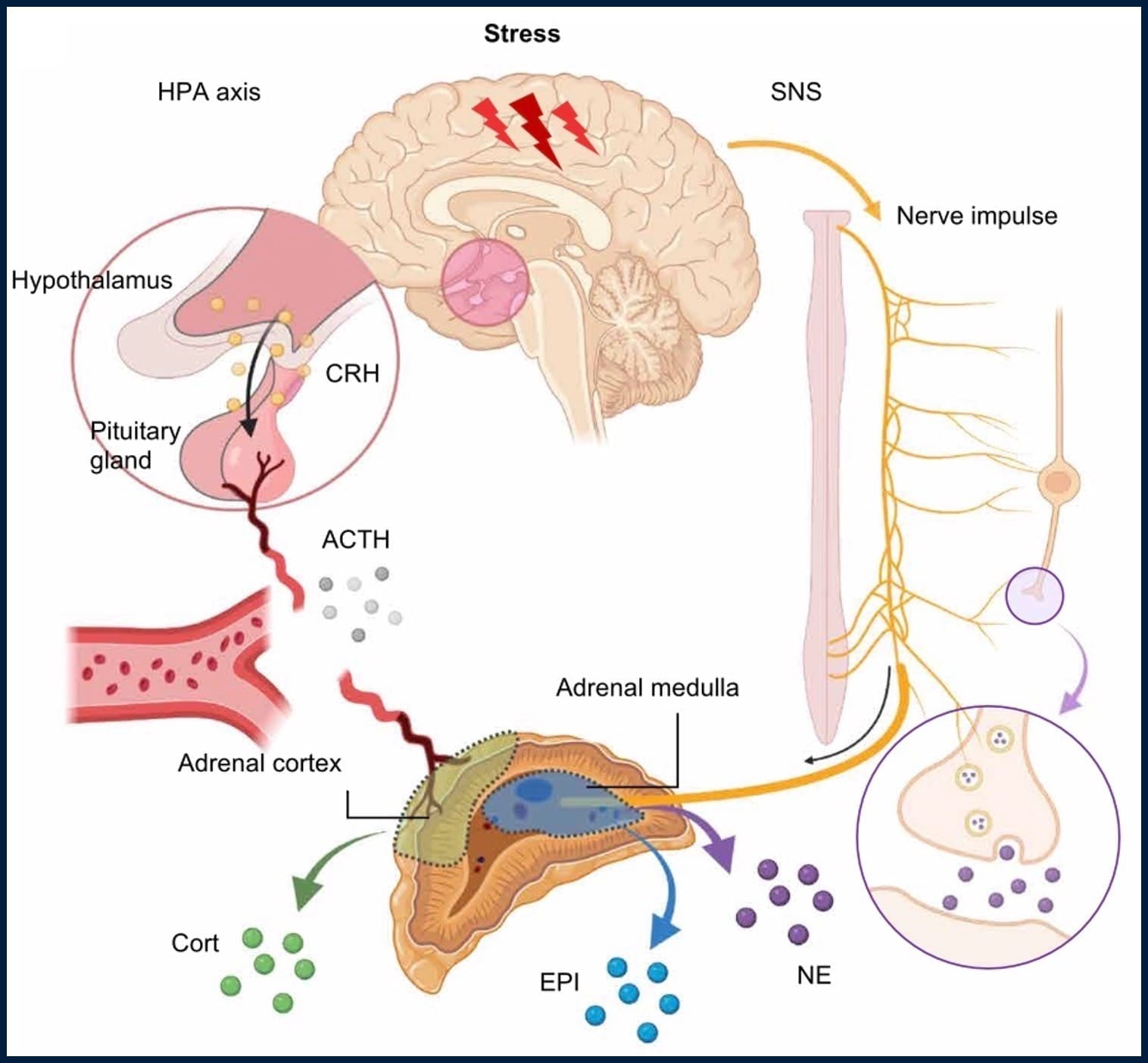
The hypothalamus, a pistachio-sized structure deep in the brain, is the primary command center for the stress response. When the hypothalamus senses danger, it sends a message to the adrenal glands in the abdomen telling them to pump out cortisol and adrenaline. These are key stress hormones that help marshal the body’s resources to fight off or run away from a threat. This is part of the body's hormonal stress response, often called the HPA axis. (Hypothalamus -> Pituitary-> Adrenals).
The other component of the stress response occurs via alarm signals sent through a specialized network of nerves called the sympathetic nervous system (SNS). These alarm signals tense the muscles to prepare to fight or run. They make the heart pound and the skin sweat. They create a state of hypervigilance in the brain at the same time they divert blood flow away from non-essential activities like digestion and urination. These alarm signals are also called the fight-or-flight response.
The stress response acts via hormones and nerve impulses. SNS = Sympathetic Nervous system. Cort = cortisol. EPI= Epinephrine. NE = Norepinephrine.
The broken stress response of fibromyalgia
The stress response should be activated only when there is an imminent threat, and then stop as soon as the threat is over. But in fibromyalgia we see constant activation of the stress response, even when there is no danger. Our stress response is like a broken smoke alarm that beeps all the time, whether exposed to any smoke or not.
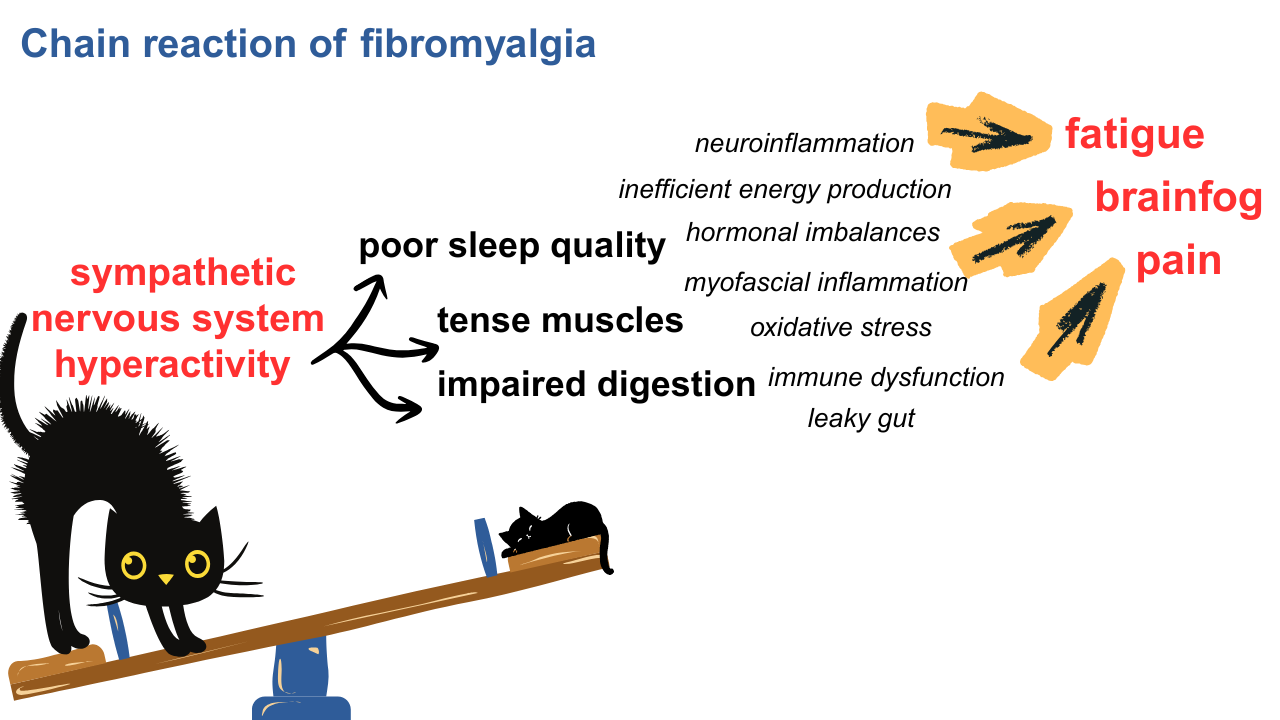
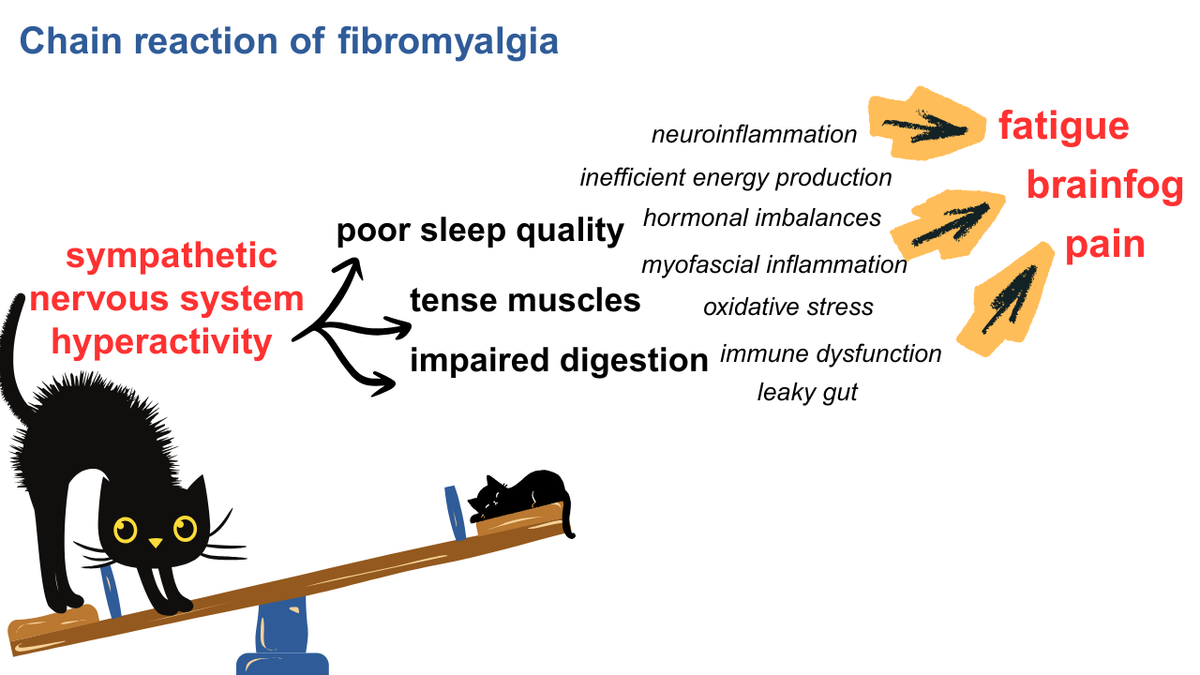
While the stress response can be life-saving in the short-term, when it is chronically activated it wreaks havoc throughout the body. Our bodies are simply not designed to live in a constant state of stress response activation. This state prevents deep sleep, tenses muscles, generates inflammation, slows digestion, interferes with efficient energy production and throws hormones out of balance. This ultimately results in pain, fatigue, brain fog and pain volume amplification in the brain, in what I call the chain reaction of fibromyalgia.
There are a variety of ways researchers can measure the level of stress response activation and they are all abnormal in fibromyalgia.
In fibromyalgia the sympathetic nervous system is hyperactive, and the HPA axis is also not functioning correctly. Together these abnormalities seem to be at the root of most fibromyalgia symptoms, which is why I place them at the very beginning of the chain reaction of fibromyalgia.
Potential triggers for the abnormal stress response in fibromyalgia
We don’t know for certain exactly how or why the brain gets stuck sounding the stress response alarm. There seems to be a genetic component; fibromyalgia tends to run in families just like diabetes and many other chronic illnesses. Fibromyalgia patients are more likely to carry genes for a dysfunctional enzyme that normally break down the chemical messengers of the fight or flight nervous system. They are also more likely to have genes that code for abnormal receptors in fight or flight nerves.
There are also epigenetic changes to DNA related to environmental exposures. Behaviors and environmental factors (diet, stress, toxins) cause reversible changes to gene expression without altering the underlying DNA sequence. Utilizing chemical tags—such as DNA methylation—the body can turn genes "on" or "off". These changes influence disease risk, and epigenetic changes can sometimes even be inherited. One study found a hypomethylated DNA pattern enriched for genes implicated in stress response in fibromyalgia.
It is possible that in the right genetic blueprint, exposure to trauma could cause epigenetic changes to DNA involved in the stress response. If so, it may mean it could be possible to reverse those epigenetic changes as well.
The Fibro Equation
There are also psychological risk factors for fibromyalgia, including childhood trauma or abuse. More than half of women with fibromyalgia report childhood sexual abuse and 90 percent have experienced a sexual or physical assault in their lifetime. There is an overlap with another disease closely linked to trauma, post-traumatic stress disorder (PTSD). Almost half of male patients with combat-related PTSD meet the diagnostic criteria for fibromyalgia.
🧩
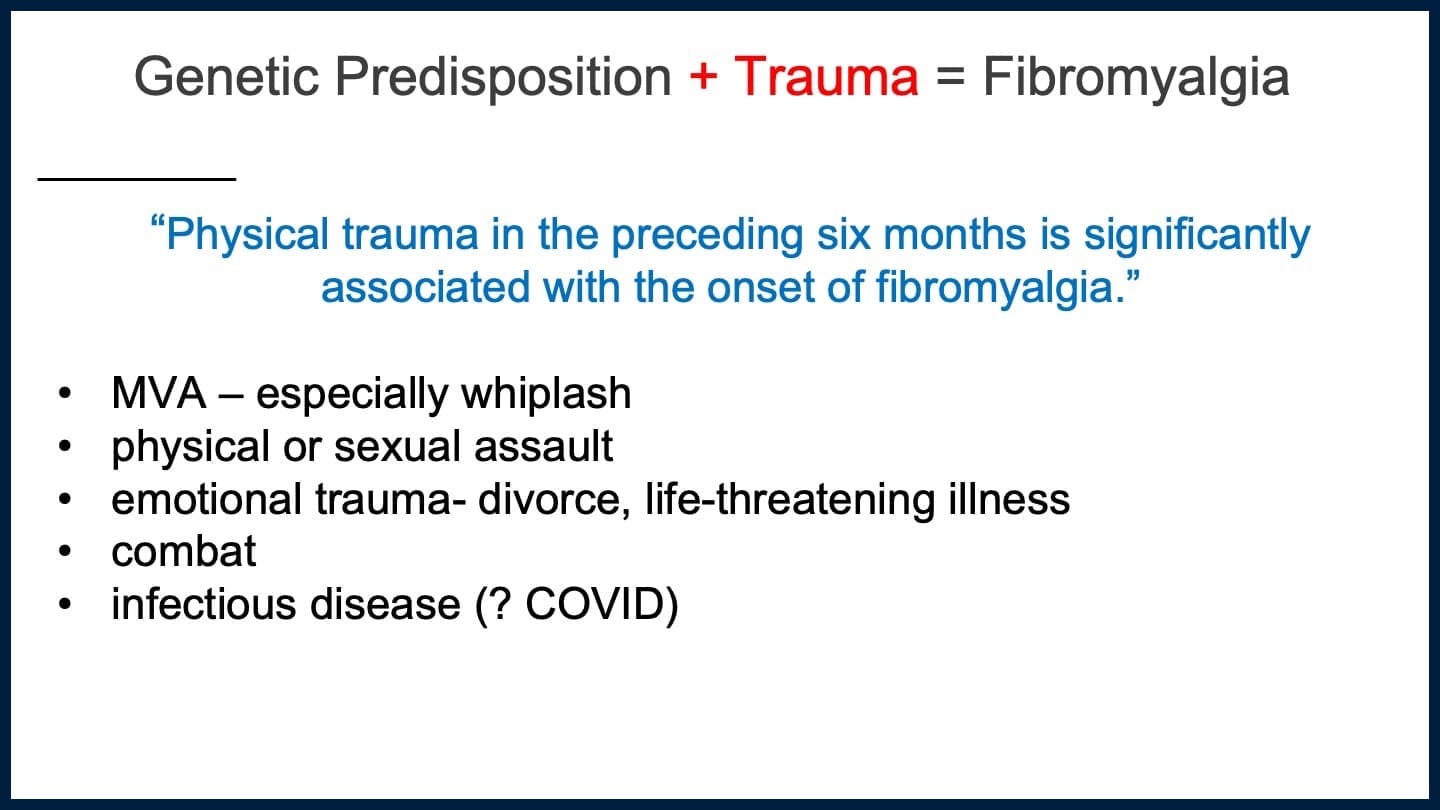
Solving the fibromyalgia puzzle “Physical trauma in the preceding six months is significantly associated with the onset of fibromyalgia.” Al-Allaf 2002
The most widely accepted theory is that in genetically or psychologically predisposed people, a trauma in adulthood triggers a prolonged activation of the stress response system. In fact, a physical trauma in the preceding six months is significantly associated with the onset of fibromyalgia. For me that trigger seems to have been the neck injury I sustained while weightlifting. Neck injuries such as whiplash are a very common trigger. Other potential triggers may include a major infection or illness. While most people with fibromyalgia can identify a provoking event such as an injury, car accident, or emotional trauma, not everyone does.
🧩
Solving the fibromyalgia puzzle "Familial aggregation studies suggested the presence of a familial predisposition to fibromyalgia, initiated or aggravated following stressful life events such as trauma, infection and psychological distress. de Ciampi Andrade et al. 2017
Effects of chronic stress response activation on the body
A functioning stress response is designed to provide a temporary burst of activity to either fight an attacker or run away. However, a chronically activated stress (fight or flight) response is damaging to the body. Brief fight-or-flight activation results in hyper-vigilance, making us more aware of our surroundings, and readies our muscles for action. Long-term activation causes poor sleep as the brain remains perpetually alert, and results in muscle tension and pain. It slows down digestion so over time the GI system begins to function poorly.
The stress response is so over-active in fibromyalgia that it is less able to respond to actual threats; if the gas pedal is already pressed all the way to the floor, you can’t pump it any harder to increase your speed. For example, an impaired ability to respond to stressors like infection is quite common. Even bodily functions as simple as standing up can be dysfunctional. Normally, going from a seated to standing position triggers the fight-or-flight nervous system to constrict the blood vessels in the legs to prevent a drop in blood pressure. In fibromyalgia, however, these nerves are already on overdrive so they can’t send the signal to the blood vessels to constrict, resulting in the common symptom of low blood pressure and dizziness upon standing.
In my opinion if we could find a way to 'reset' the hypothalamus so that it was not constantly activating the stress response then we would have the cure for fibromyalgia. Perhaps modifying any epigenetic changes that have occurred will be possible in the future. Until then the key to treatment is to lessen all the downstream problems caused by a hyperactive stress response.
FM and reduced pressure pain thresholds aggregate in families. These findings have important clinical and theoretical implications, including the possibility that genetic factors are involved in the etiology of FM and in pain sensitivity.
Fibromyalgia (FM) patients have signs of relentless sympathetic hyperactivity associated with hyporeactivity to stress. Adrenergic receptors (ARs) are parts of the sympathetic nervous system that are fundamental for maintenance of homeostasis. AR gene polymorphisms are related to the risk of developing FM.
The association between COMT p.Val158Met polymorphism and central sensitization in fibromyalgia is essential as it refers to the severity of central sensitization.
This meta-analysis identified an association between fibromyalgia risk and the COMT Val158Met polymorphism as well as the Fibromyalgia Impact Questionnaire (FIQ) score in fibromyalgia patients.
In particular, our analysis suggested that pathways related to response to stress ... were differently methylated in patients with FM and could be implicated in the disease process .
In my opinion, the best way to understand fibromyalgia is to think of it as a broken stress response system that is stuck in the "on" position. Or said another way, our sympathetic nervous system (SNS) is chronically
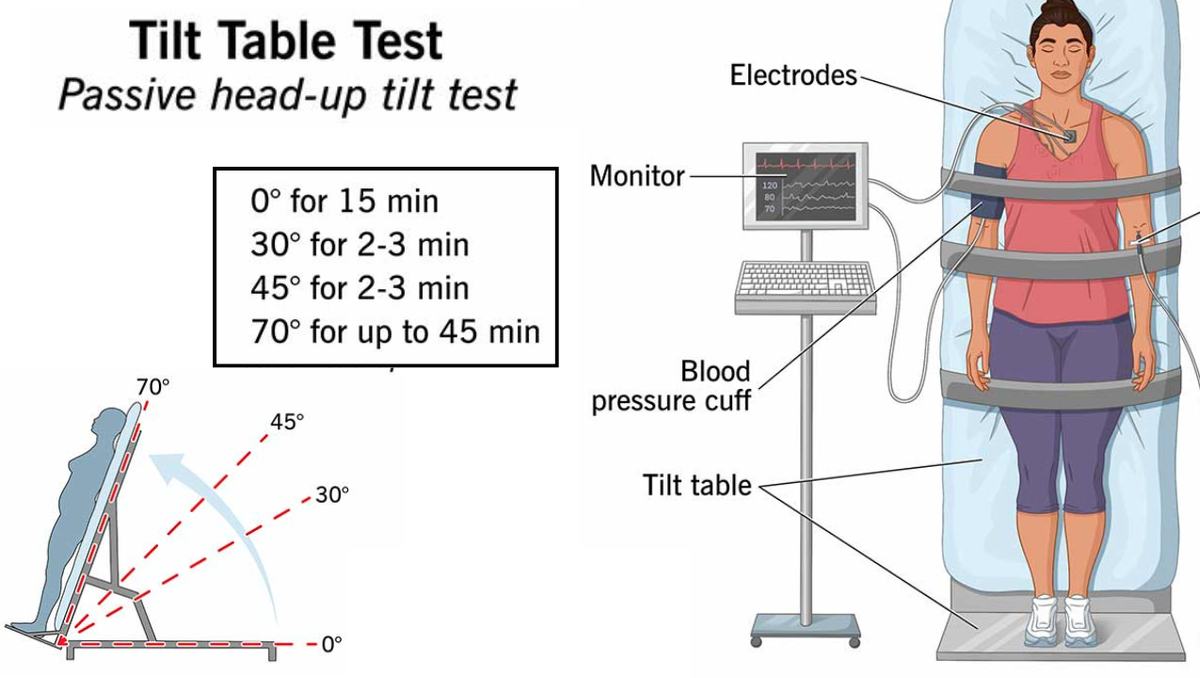
We can measure the level of sympathetic nervous system (SNS) activation by the body's response to changes in position like standing up. It's a bit of a Goldilocks situation. Just the right amount of SNS signals,
There is another way we can gauge sympathetic nervous system activity that does not involve any fancy electrodes or heart monitors. We can just ask folks about their symptoms! In fibromyalgia the sympathetic branch of the autonomic nervous system is

 Ginevra Liptan, MD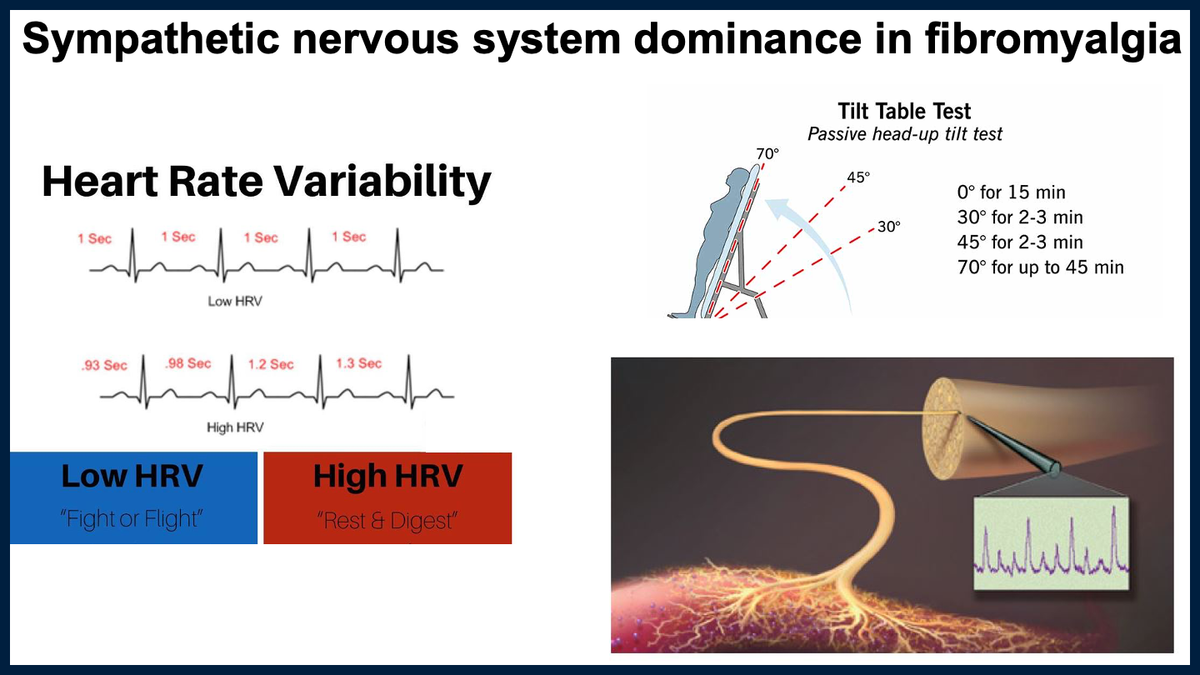
 Lesley M Arnold
 A W Al-Allaf
 S Greenfield
 D Buskila
 Gilberto Vargas-Alarcón
 Index by Author
 Index by Author
 M Martínez-Jauand
 Jules Desmeules
 Young Ho Lee
 Daniella Amital

 Daniel Ciampi de Andrade